
2026 Legislative Session Review
Every legislative session, the rules that shape life in Maine are up for debate. The Permanent Commission engages that process as Maine’s independent, nonpartisan state agency charged with examining how our systems perpetuate racial injustice. We track legislation, testify, and make the case for policies that repair harm and expand opportunity for everyone.
This work is done through collaboration between the Permanent Commission’s Policy Committee and staff. The Policy Committee is empowered by the full Commission to determine positions and priorities among the bills that are considered by the Legislature.
We are guided by what communities most impacted by injustice have said they need, and by the evidence of how our current systems are failing. The details of how policy is written and implemented matter as much as its intent. When reforms aren’t built with racial justice explicitly in mind, they tend to reinforce injustice.
In 2026, the Commission testified on 29 bills across a wide range of issues that matter deeply to the communities we serve. We also supported initiatives that were ultimately included in the state budget, such as the Eviction Prevention Program and the Wabanaki Studies program. And we engaged with legislation related to state government processes, support for survivors of trafficking, and labor law violations.
A note on “neither for nor against” positions: The Permanent Commission sometimes testifies neither for nor against legislation when the complexity of a policy area requires more attention to detail or where we lack the data to show what the precise impact of a bill will be. In policies regarding the criminal legal system, for example, reforms must be designed and implemented with a clear understanding of the racial and social injustice of the broader system. That requires more transparency about conditions and practices in Maine prisons and jails.
Wabanaki Issues
The Permanent Commission strongly supports legislation that recognizes the inherent rights of Wabanaki Nations. For too long, the state of Maine has denied Wabanaki Nations the rights and protections available to every other federally recognized tribal nation in our country. Maine stands alone, decades behind the rest of the country in respecting the will of Indigenous communities, maintaining a system that keeps the Wabanaki Nations subservient to the state. Recognizing self-determination is the bare minimum to begin repairing the theft of land and the violence our laws have inflicted on the Wabanaki Nations and their people.
This refusal to recognize Wabanaki sovereignty hasn’t harmed tribal citizens alone. It has blocked Wabanaki Nations from accessing resources for environmental protection, economic development, and disaster relief; programs that would benefit their citizens and the rural Maine communities around them. The Permanent Commission supports returning land and water stewardship rights to the Wabanaki Nations, and we recognize their expertise in what their communities need. The bills we testified on in 2026 reflect these priorities.
| LD | Title | Position | Status |
|---|---|---|---|
| 395 | Resolve, Establishing the Working Group to Develop Recommendations for Extending Federal Laws Beneficial to the Wabanaki Nations | Support | Enacted. Amended to establish a working group. |
| 785 | An Act to Amend Certain Tax Laws Regarding the Wabanaki Nations | Support | Enacted & Funded. Amended to change focus to tax exemptions. |
| 1054 | An Act to Amend Certain Definitions in Laws Governing Conservation Easements | Support | Enacted. |
Criminal Legal System Reform
The Permanent Commission approaches policy to reform the criminal legal system with the understanding that our current system is failing us all. Research suggests that as many as half of violent crimes in the US1 and two-thirds of all crimes in Maine2 go unreported because people don’t trust the system.
The Permanent Commission’s Policy Committee broadly supports legislation that make systemic reforms to Maine’s criminal legal system, including those that address racial profiling and targeting, heal harm, repair trust, and reduce imprisonment through restorative justice diversion programs, support communities and people through the re-entry process, and remove barriers to housing, employment, and civic responsibility after reentry.
| LD | Title | Position | Status |
|---|---|---|---|
| 1941 | Resolve, Establish the Commission to Examine the Intersection of Parole and Current Sentencing Practices | NFNA | Amended to change focus from implementing the recommendations of the previous parole commission to create a new commission to address remaining implementation questions. Enacted. |
| 1911 | An Act to Automatically Seal Criminal History Record Information for Certain Crimes | NFNA | Vetoed. |
| 1962 | An Act to Increase Legislative Access to Department of Corrections Facilities and to Direct the Commissioner to Establish Rules Regarding Legislator Access to Correctional and Detention Facilities | NFNA | Amended to change focus from creating a Corrections Ombudsman to ensuring greater transparency and access to DoC facilities. Enacted and allowed to become law unsigned. |
| 1923 | An Act to Update Juvenile Justice System Reporting Requirements and to Direct the Department of Corrections and the Department of Health and Human Services to Study Modifying the Long Creek Youth Development Center | NFNA | Enacted. Amended to change focus from repurposing Long Creek to creating a plan to further divert youth from the legal system. |
| 1917 | An Act to Allow the Sealing of Criminal History Record Information Related to Convictions for Conduct That Is No Longer a Crime in the State and to Clarify Dissemination of Sealed Criminal History Record Information to the Department of Professional and Financial Regulation | NFNA | Recalled from the Governor’s desk and left on the House’s Unfinished Business calendar. |
| 1918 | An Act to Clarify the Criminal History Record Information Act with Respect to Criminal Charges Dismissed as the Result of a Plea Agreement and to Clarify Dissemination of Sealed Criminal History Record Information to the Department of Professional and Financial Regulation | NFNA | Recalled from the Governor’s desk and left on the House’s Unfinished Business calendar. |
| 2126 | An Act to Eliminate the Juvenile Crime of Willful Refusal to Pay a Fine or Comply with the Terms of a Court Order | NFNA | Enacted. |
| 1916 | An Act to Automatically Seal Criminal History Record Information for Class D and Class E Crimes Relating to Marijuana Possession and Cultivation | NFNA | Committee voted Ought Not to Pass and the Legislature carried that vote forward. |
| 1919 | An Act to Expand the Types of Convictions Eligible for Sealing Through a Post-judgment Motion to Seal Criminal History Record Information | NFNA | Committee voted Ought Not to Pass and the Legislature carried that vote forward. |
Food Access
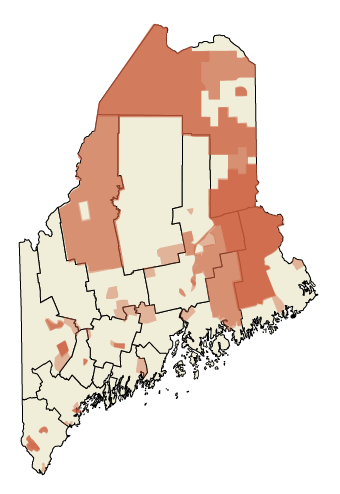
The Permanent Commission’s Policy Committee broadly supports legislation aimed at addressing food insecurity in Maine. Access to healthy, nutritious, and culturally appropriate food is at the center of all human wellbeing. This is a concern in every Maine community, with 1 in 7 Maine people and 1 in 5 Maine children facing hunger in 2023.3 Hunger falls unevenly across our communities, with notable disparities among racial groups and rural communities.4,5 In some parts of rural Maine, more than 1 in 6 people and nearly 1 in 3 children face hunger.6 Households of color face hunger at a rate of 28%, Black households at 40%,7 and white households at 13%.8
This has many causes, including a lack of accessible food retailers, lack of access to land for farming and cultivation, and wealth and income inequality. These systemic factors overlap and compound to cause unique challenges for different communities. For new Mainers who have bravely overcome challenges to build new lives as our neighbors, that means facing additional barriers to earn a stable income or to get help with accessing food. Our Wabanaki neighbors also face additional barriers stemming from the theft of their land and the state’s refusal to recognize their sovereignty. And Maine children face some of the worst consequences since experiencing hunger as a child can lead to development and learning challenges.
When everyone is fed, we all benefit because people are able to bring their full attention and energy to their jobs, their families, and their communities.
| LD | Title | Position | Status |
|---|---|---|---|
| 2122 | An Act to Prevent Negative Impacts from Federal Funding Changes to and Fund Eligibility Determinations and Outreach for the Supplemental Nutrition Assistance Program | Support | Not funded. |
| 2064 | An Act to Expand Access to Early Childhood Nutrition by Establishing a Grant Program for Public Preschools | Support | Not funded. |
| 2051 | An Act to Ensure Access to the Supplemental Nutrition Assistance Program in Maine | Support | Enacted. |
| 2040 | Resolve, to Study Food Insecurity Measures in Maine | Support | Enacted. Amended to change focus from collecting food insecurity data to assess and evaluate food insecurity measures to enable collection of data in the future. |
| 2004 | An Act to Enhance Support of Local Nutrition Incentive Programs by Modifying the Eligibility Requirements of the Fund to Address Food Insecurity and Provide Nutrition Incentives | NFNA | Enacted. |
Federal Immigration
The Permanent Commission supports legislation that protects our neighbors from government weaponization.
New Mainers have shown extraordinary courage to build safety and opportunity as our neighbors, and nobody who has done that should live in fear going about their day. But fear is now a reality for many communities in Maine. New Mainers and Mainers of color are living under constant threat of abduction by ICE agents who have been targeting schools, healthcare facilities, libraries, childcare facilities, and other locations where Mainers access essential resources and services.
When the government can take people off the street without cause, it makes all of us less safe. People stop showing up10 for work. Workers lose their income overnight and businesses struggle. Families skip meals11 instead of risking trips to the grocery store, food bank, or community suppers. Kids lose access to school lunch because their parents keep them home.12 Children notice when armed agents stand near school entrances and classmates stop showing up. Survivors of violent crimes think twice before calling for help. People stop going out13 altogether. This is how fear reshapes communities. Nearly every aspect of public life becomes more risky, especially for people of color, including Wabanaki people and other tribal citizens,14 as well as U.S. citizens who are wrongly profiled15 or simply protesting government oppression.
| LD | Title | Position | Status |
|---|---|---|---|
| 2106 | An Act to Limit Consent for Entry into Nonpublic Areas of and to Limit Access to Protected Records Maintained by Certain Public Entities | Support | Enacted. |
| 2176 | An Act to Safeguard Personal Information and Strengthen Tenant Rights in Maine | Support | Enacted. Amended to change focus from funding legal representation to protecting tenants from having sensitive information reported to law enforcement voluntarily by landlords. |
Childcare
Maine is in the midst of a child care crisis. High costs and a shortage of providers leave many families — especially families of color —with no options, while child care providers struggle to make ends meet and to retain staff.
The costs are stark. Child care in Maine averages twenty percent of a family’s annual income – $12,500, and can be as high as $19,000.16 For Maine families of color, whose median income is significantly lower than that of white families17 and who are more likely to have irregular work schedules,18,19 that cost is often simply out of reach.
This affects all of us. In 2023, the primary reason 22,000 Mainers were not working was a lack of child care.20,21 When families can’t find care they can trust and afford, parents leave the workforce, employers lose workers, and communities lose what people bring when they’re able to show up fully. The Permanent Commission’s Policy Committee broadly supports legislation that makes child care affordable and accessible for every Maine family.
| LD | Title | Position | Status |
|---|---|---|---|
| 1414 | Resolve, to Improve the Availability of Child Care by Increasing Certain Reimbursements Under the Maine Child Care Affordability Program and Establishing a Grant Program to Facilitate Off-hours Care | Support | Not funded. |
| 2066 | An Act to Establish the Child Care Employment Award | Support | Not funded. |
Housing
Every Mainer should have a safe, affordable place to call home. Too many Mainers do not. As of 2023, Maine had the nation’s lowest rental vacancy rate at 2.1%,22 and the cost to purchase a median-priced home has far outpaced what most Mainers can afford.23
This housing crisis touches every Maine community, but it doesn’t hit everyone equally. Decades of discriminatory lending, exclusionary policy, and compounding wealth inequality have shaped who gets to own a home in Maine.24,25 Only 31% of Black Mainers are homeowners, while 75% of white Mainers are.26 Maine ranks 42nd out of 50 states on the national housing equity index.27 When homeownership is out of reach and rentals are scarce, people lose housing altogether. 31.6% of Maine’s unhoused population come from Black communities, despite those communities making up only 1.7% of the overall state population.28
These disparities tell the story of what happens when systems designed to exclude people are left in place long enough. Solving the housing crisis means building systems that will support people and strengthen our families and communities. The Permanent Commission’s Policy Committee broadly supports legislation that addresses housing affordability, expands access to homeownership, and makes sure that the communities hit hardest are centered in how those solutions are built.
| LD | Title | Position | Status |
|---|---|---|---|
| 2124 | An Act to Support Emergency Shelter Funding Using Revenue from the Real Estate Transfer Tax | Support | Enacted. |
| 2164 | An Act to Assist Communities with Converting Vacant School Buildings into Housing | NFNA | Not funded. |
| 2077 | An Act to Reduce the Cost of Purchasing a Home by Providing Grants to Reduce Mortgage Rates | NFNA | Not funded. |
| 2116 | An Act to Extend the Sunset Date of the Affordable Housing Income Tax Credit | NFNA | Enacted. |
References
| 1. Sered, D. (2017). Accounting for Violence: How to Increase Safety and Break Our Failed Reliance on Mass Incarceration. New York: Vera Institute of Justice. https://www.vera.org/downloads/publications/accounting-for-violence.pdf |
| 2. Murray, C., Dumont, R. & Shaler, G. (2022). 2022 Maine Crime Victimization Report: Informing Public Policy for Safer Communities. Maine Statistical Analysis Center, University of Southern Maine. |
| 3. Hunger in America: Maine. (n.d.) Feeding America. |
| 4. Rabbitt, M. P., Reed-Jones, M., Hales, L. J., & Burke, M. P. (2024). Household food security in the United States in 2023 (Report No. ERR-337). U.S. Department of Agriculture, Economic Research Service. |
| 5. Myall, J. (2025). State of Working Maine 2025: Strengthening Economic Opportunity in Rural Communities and Beyond. Maine Center for Economic Policy. |
| 6. Map the Meal Gap: Maine. (2025). Feeding America. |
| 7. Graham, G. (2021, March 28). Pandemic reveals race disparities around hunger in Maine. Portland Press Herald. |
| 8. Myall, J. (2019). Issue Brief: Food Insecurity in Maine. Maine Center for Economic Policy. |
| 9. Food Access Research Atlas. (2026). USDA Economic Research Service, ESRI. |
| 10. Rubalcaba, J.A., Bucheli, J.R., & Morales, C. (2024). Immigration enforcement and labor supply: Hispanic youth in mixed-status families. Journal of Population Economics, 37(2). https://www.thecgo.org/research/immigration-enforcement-and-labor-supply/ |
| 11. Gonzalez, D., Karpman, M., & Kenney, G.M. (2024). Mixed-status families and immigrant families with children continued avoiding safety net programs in 2023. Urban Institute. https://www.urban.org/research/publication/mixed-status-families-and-immigrant-families-children-continued-avoiding |
| 12. Capps, R., Castañeda, R.M., Chaudry, A., & Santos, R. (2007). Paying the price: The impact of immigration raids on America’s children. Urban Institute for the National Council of La Raza. https://www.urban.org/research/publication/paying-price-impact-immigration-raids-americas-children |
| 13. Bernstein, H., Gonzalez, D., & Guelespe, D. (2025, March 12). Immigrant families express worry as they prepare for policy changes. Urban Institute. https://www.urban.org/research/publication/immigrant-families-express-worry-they-prepare-policy-changes |
| 14. Alfaro, M. (2026, January 15). Native Americans are being swept up by ICE in Minneapolis, tribes say. The Washington Post. https://www.washingtonpost.com/politics/2026/01/15/native-americans-ice-minneapolis/ |
| 15. Sapien, J., Kao, J., & Ornstein, C. (2025, October 16). We found that more than 170 U.S. citizens have been held by immigration agents. They’ve been kicked, dragged and detained for days. ProPublica. https://www.propublica.org/article/immigration-dhs-american-citizens-arrested-detained-against-will |
| 16. Health Management Associates. (2021). 2021 Maine Child Care Market Rate Survey. https://www.maine.gov/dhhs/sites/maine.gov.dhhs/files/inline-files/2021%20Market%20Rate%20Survey_Final.pdf |
| 17. Based on Partnerships for Health analysis of data from the US Census Bureau, 2022 American Community Survey (Table S1903). |
| 18. Adams, G., & Henly, J.R. (2020). Child care subsidies: Supporting work and child development for healthy families. Health Affairs. https://www.healthaffairs.org/do/10.1377/hpb20200327.116465/ |
| 19. Lieberman, H., Agarwal, S., Caldwell, J., & Fulgoni III, V. (2020). Demographics, sleep, and daily patterns of caffeine intake of shift workers in a nationally representative sample of the US adult population. Sleep, 43(3). |
| 20. Phillips, A. (2023, May 9). Child care legislation to benefit Maine workers and families. Maine Center for Economic Policy. https://www.mecep.org/blog/child-care-legislation-benefit-maine-workers-families/ |
| 21. Myall, J. (2022). State of Working Maine 2022: Recognizing the Value of Labor. Maine Center for Economic Policy. https://www.mecep.org/wp-content/uploads/2022/10/State-of-Working-Maine-2022.pdf |
| 22. US Census Bureau. (2023). Quarterly Vacancy and Homeownership Rates by State and MSA. Table 1. Rental Vacancy Rates by State: 2005–present. https://www.census.gov/housing/hvs/data/rates.html |
| 23. Permanent Commission on the Status of Racial, Indigenous, and Tribal Populations. (2024). State of Racial Disparities, pp. 3–4. |
| 24. Permanent Commission on the Status of Racial, Indigenous, and Tribal Populations. (2024). State of Racial Disparities, pp. 5–6. |
| 25. Rothstein, R. (2017). The color of law: A forgotten history of how our government segregated America. Liveright Publishing. |
| 26. America’s Health Rankings. (2022). Homeownership racial disparity. |
| 27. America’s Health Rankings. (2024). Homeownership Racial Disparity in United States. |
| 28. MaineHousing. (2025). 2025 Point in Time Count. |