Amending Maine’s Constitution for Honesty and Accountability
Date:
Whatever our color, background, or zip code, we want to live in communities that reflect honesty about who we are and integrity in how we treat others.That’s why the Permanent Commission on the Status of Racial, Indigenous, and Tribal Populations firmly supports the proposed state constitutional amendment to publish all original sections of the Maine constitution, including the state's obligations to the Wabanaki tribal nations.
This crucial step towards government transparency and accountability aligns with our commitment to honesty about our history and the fundamental right of the public to know the truth of our past. By making these historical documents accessible to all, we empower our citizens to engage in informed civic discourse and hold our government accountable for its actions, past and present. Acknowledging our obligations to the Wabanaki tribal nations demonstrates a commitment to fulfill those obligations and fosters a deeper understanding of our shared history.
We stand together with the Wabanaki tribal nations, the Secretary of State, the Attorney General and the entire Legislature, which unanimously passed LD 78, in support of this amendment. Now that it has passed the Legislature, Maine voters will decide what happens next. Question 6 on the November 7 ballot asks voters:
Do you favor amending the Constitution of Maine to require that all of the provisions of the Constitution be included in the official printed copies of the Constitution prepared by the Secretary of State?
We want to hear from you!
Date:
The Permanent Commission is seeking input from community members in setting policy priorities to improve the status of racial, Indigenous, and tribal populations in Maine. We value your voices and perspectives in our collective pursuit of a more equitable and inclusive future.
Your insights can play a pivotal role in shaping the policies that will move us toward a better, more just Maine for all of us. Please take a moment to use this form to share your thoughts and ideas about policies that you believe will foster equality, justice, and unity in Maine.
A list of bills that will be considered in the next legislative session can be found here.
Permanent Commission Praises Governor Mills’ Executive Order to Develop an Office of New Americans in Maine Government
Date:
AUGUSTA - Today the Permanent Commission on the Status of Racial, Indigenous, and Tribal Populations issued a statement of strong support for Governor Janet Mills’ executive order directing the Governor’s Office of Policy Innovation and the Future to develop an Office of New Americans.
“Maine deserves common sense solutions that make our state stronger by respecting people’s rights and honoring our values,” said Ariel Ricci, the Executive Director of the Permanent Commission. “We know that integrating new immigrants into our communities where they can both provide for their families and provide necessary services just makes sense.”
“No matter what we look like, or how much money we have, when people cross borders our human rights come with us, and so do our skills and life experiences. By building a bridge between those skills and the workforce our state needs, we can help our communities grow and thrive together.” said Commissioner Dina Yacoubagha, who serves in a seat representing immigrant communities and is the Program Manager for the Maine Multicultural Center. “I’m excited to support the work of the Office of New Americans as we join together to work toward a system that recognizes everything we have to offer each other.”
The Permanent Commission on the Status of Racial, Indigenous, and Tribal Populations was established in 2019, with the enactment of LD 777 and began its work in late 2021, after receiving its first funding with the enactment of LD 1034. The Permanent Commission has a mission to examine racial disparities across all systems with a goal of improving the status and outcomes for the historically disadvantaged racial, Indigenous, and tribal populations in the state. The Permanent Commission is empowered to advise all three branches of Maine government and to introduce legislation. More information about the Permanent Commission’s work can be found on its website: https://www.pcritp.me
Community Listening Session Reveals Lived Experiences of Systemic Racism in Maine
Date:
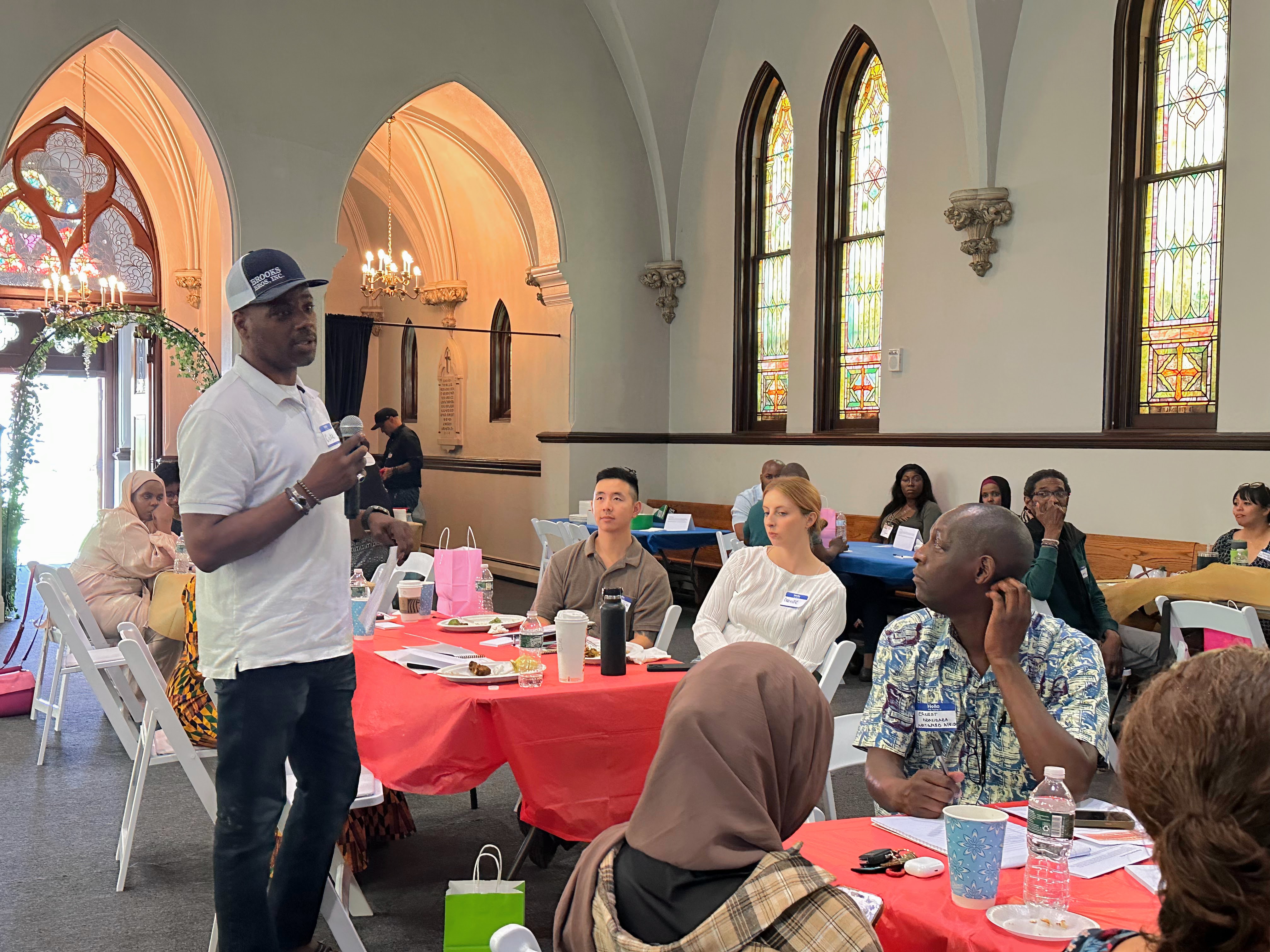
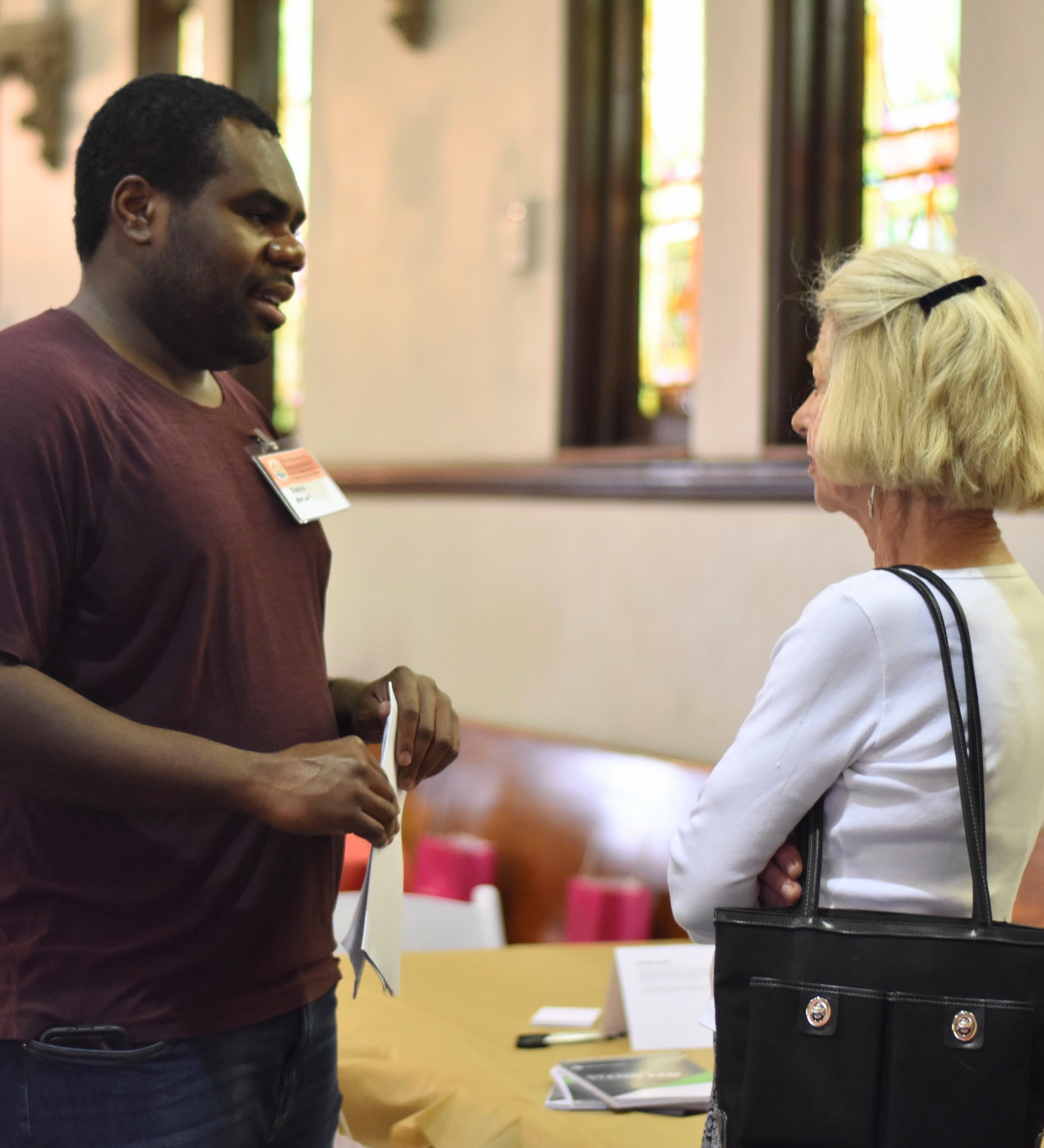
LEWISTON - The Permanent Commission on the Status of Racial, Indigenous, and Tribal Populations hosted a community listening session at the Agora Grand Event Center in Lewiston on Sunday, July 23. The community listening session provided an opportunity for the Permanent Commission to hear directly from racial, Indigenous, and tribal populations about their lived experiences related to disparities caused by systemic racism in Maine.
The event was part of a series that will contribute to the Permanent Commission’s goal to build the capacity of overburdened communities to identify issues that affect their communities and participate in, influence, and take on leadership roles in related decision-making processes. One previous event was held in Bangor in December 2022 and future events will be held in other towns and cities across the state.
The listening session was attended by a diverse group of about 30 people, who shared their experiences and views of the challenges faced by everyone in Maine, but are exacerbated by racial and tribal status. Some of the topics discussed by attendees were housing, reproductive justice, tribal sovereignty, and access to child care.
“Community engagement lies at the heart of the Permanent Commission’s mission and shapes the way we carry out our work. In statute, the Permanent Commission is tasked with the duty to hold public hearings to center and amplify the voices of historically disadvantaged populations,” said Ariel Ricci, Executive Director of the Permanent Commission. “More than informants or consultants, members of these communities are essential partners helping to define the Permanent Commission’s direction and approach. Our priority is hearing from these community members and creating a space where they feel comfortable enough to share their experiences.”
“As the newest Commissioner appointed to the Permanent Commission, I was honored to be a part of this community listening session that created space for people most impacted by racial disparities as they gave voice to their own lived experiences,” said Commissioner Reggie Parson, who serves on the Permanent Commission in a seat representing youth. “Hearing directly from communities is vital to the effort to dismantle structural racism so nothing stands in the way of a good life – the way it should be – for all those who call Maine home.”
“For too long, Maine and the United States have allowed the institutions and policies that drive structural racism to continue,” said Commissioner Bruce King, who serves on the Permanent Commission in a seat representing a historically disadvantaged population. “These structures hurt all of us, including rural Mainers, Black and African American people, Indigenous people, other people of color, and all Maine people struggling to thrive under these systems. Empowering communities to speak up about the barriers we face is a crucial step toward a more just and better way of life for all of us.”
“I am so proud of this community for showing up to share real lived experiences of racial disparities that exist in Maine,” said Commissioner Keith Bisson, who serves on the Permanent Commission in a seat representing a community development financial institution. “The Permanent Commission’s charge is to examine racial disparities in Maine–disparities that ultimately hurt each one of us. Hearing directly from people who have experienced these disparities first-hand is essential to that work.”
The Permanent Commission on the Status of Racial, Indigenous, and Tribal Populations was established in 2019, with the enactment of LD 777 and began its work in late 2021, after receiving its first funding with the enactment of LD 1034. The Permanent Commission has a mission to examine racial disparities across all systems with a goal of improving the status and outcomes for historically disadvantaged racial, Indigenous, and tribal populations in the state. The Permanent Commission is empowered to advise all three branches of Maine government and to introduce legislation.
Permanent Commission to Host Lewiston Community Listening Session
Date:
Lewiston - The Permanent Commission on the Status of Racial, Indigenous, and Tribal Populations (“Permanent Commission”) will host a community listening session at Agora Grand Event Center in Lewiston on Sunday, July 23 at noon. Lunch will be served and childcare will be provided on site.
The community listening session is an opportunity for the Permanent Commission to hear directly from racial, Indigenous, and tribal populations about their lived experiences related to disparities caused by structural racism in Maine. The event is part of a series that will contribute to the Permanent Commission’s goal to build the capacity of overburdened communities to identify issues that affect their communities and participate in, influence, and take on leadership roles in related decision-making processes.
“Community listening sessions are a way to hold space for the people most impacted by racial disparities and to give voice to their own lived experiences,” said Angela Okafor, Community Engagement Director for the Permanent Commission. “Hearing directly from communities is vital to the effort to dismantle structural racism so nothing stands in the way of a good life – the way it should be – for all those who call Maine home.”
WHAT: Community Listening Session WHEN: Sunday, July 23, 2023, from 12:00 p.m. to 3:00 p.m. WHERE: Agora Grand Event Center, 220 Bates St, Lewiston, ME 04240. Parking is available at Community Concepts.
The Permanent Commission is Hiring a Policy Coordinator
Date:
The Policy Coordinator at the Permanent Commission on the Status of Racial, Indigenous, and Tribal Populations (Permanent Commission) will lead work related to the Permanent Commission’s statutory mandate, to advise and consult with the legislative, executive, and judicial branches of government about the status of historically disadvantaged racial, Indigenous, and tribal populations and strategies to improve that status.
The Policy Coordinator will develop and implement the Permanent Commission’s broad-reaching public policy platform to reduce racial disparities in public determinants of health in all sixteen counties. It requires a high degree of collaboration with all relevant Permanent Commission staff and Commissioners, external organizations, legislators and legislative committees, and a wide range of state agencies and entities.
The position reports to the Executive Director.
Primary responsibilities include:
Develop overall policy strategy
Develop and implement the Permanent Commission’s comprehensive, data-informed public policy platform to consult with and advise the legislative, executive, and judicial branches to improve opportunities and eliminate disparities for historically disadvantaged racial, Indigenous, and tribal populations in the State of Maine.
Develop and implement the public policy work plan for each fiscal year and ensure it is accomplished in a timely and efficient manner, delegating tasks where appropriate.
Lead legislative engagement strategy
Develop and implement an engagement strategy for each legislative session, including:
Identify and track bills under consideration by the Legislature that may have a direct or indirect impact on racial, Indigenous, and tribal populations and/or that mention or may impact the work of the Permanent Commission.
Develop proposals for consideration by the Policy Committee and Executive Director on priority bills on which the Permanent Commission should provide public testimony.
Prepare and present testimony to the Legislature with accurate information and research from reliable sources related to actual and/or potential impacts of proposed legislation on racial, Indigenous, and tribal populations.
On request by Joint Standing Committees, prepare for and participate in Legislative Work Sessions.
Support the Executive Director in preparation of testimony to the Legislature on proposals that impact the resources, capacity, staffing, or funding of the Permanent Commission.
Develop proposals for legislation to improve opportunities and eliminate disparities for historically disadvantaged racial, Indigenous, and tribal populations, including:
Draft proposed legislation.
Engage with Legislators to secure appropriate co-sponsors and wider support.
Work with non-partisan Legislative staff (Office of the Revisor, Office of Policy and Legal Analysis, Office of Fiscal and Policy Analysis) to provide accurate information to facilitate their work.
Prepare and deliver testimony in support of Permanent Commission-introduced bills.
On request by Joint Standing Committees, prepare for and participate in Legislative Work Sessions.
Manage the public policy components of projects and initiatives arising out of enacted legislation that requires the Permanent Commission to act and report on progress to the Legislature.
Manage executive and judicial branch engagement strategies
With the Executive Director, engage with and consult the judicial branch and executive branch agencies to develop appropriate strategies to advise and consult on ways to improve opportunities for and status of historically disadvantaged racial, Indigenous, and tribal populations.
Lead the public policy components of racial impact assessments of current executive branch programs and policies, including identifying areas of disproportionate racial impact and recommendations to reduce disparities in program design and implementation.
Lead the public policy components of other research projects, including analyzing and interpreting data from primary and secondary research to inform the Permanent Commission’s public policy positions and recommendations.
Manage Policy Committee
Manage the monthly meetings of the Permanent Commission’s Policy Committee, including
Pro-actively working with the Committee Chair to create agendas and decision points for the Committee
Writes and presents briefing papers on public policy issues that identify strategic options and recommendations about how to best advance the Permanent Commission’s public policy platform
Arranging Committee meetings, minutes, and other Committee administration.
Being the first point of contact for Committee members or other Commissioners on policy-related issues.
Miscellaneous
Manage, mentor, and support Permanent Commission Fellows and Interns undertaking public policy work.
Advise and provide technical support to the Executive Director, Permanent Commission staff, Policy Committee, and full Permanent Commission on any public policy implications and issues that may arise in any projects or initiatives.
Skills or knowledge required:
Excellent written and oral communication skills, ideally developed in a public policy context.
Ability to remain non-partisan and build relationships with individuals from all parties.
Demonstrated experience of working collaboratively with a range of internal and external partners.
Ability to multitask, work independently, take initiative, and problem-solve.
Exhibits the Permanent Commission’s cultural values of teamwork, responsibility, accountability, excellence, openness, and balance.
Excellent project management skills.
Ability to be flexible and innovative.
Minimum qualifications:
At least five years of experience with public policy advocacy, state or federal government, and/or law.
Strong understanding of issues related to racial, Indigenous, and/or tribal populations, through lived and/or professional experience.
Strong relationships and relationship-building skills, especially with BIPOC communities, state government actors, community partners, and others.
Additional Attributes of Strong Candidates:
Experience or understanding of the Maine State Legislature.
Racial Impact Assessment - Request for Proposals Announcement
Date:
As part of the Permanent Commission’s commitment to examining and mitigating racial disparities in Maine, we are excited to announce a request for proposals (RFP) to design a comprehensive Racial Impact Assessment (RIA) model. The RIA program will create a formal process for the Permanent Commission to assess equity considerations in current Executive agency programs and policies. This includes, but is not limited to, implementation of federal goals as set out in the Justice40 Initiative.
Despite strides made towards racial equity, marginalized communities in Maine continue to experience systemic barriers to essential government programs. These disparities can manifest in various ways, including in access to education, healthcare, employment opportunities, housing, and more. It is critical to develop a comprehensive and systematic approach to assessing and eliminating disparities that may exist in government programs and policies.
The purpose of the RIA initiative is to evaluate current government programs and policies through a racial equity lens to identify strengths, gaps, and areas for improvement. We invite researchers, evaluators, and experts in program evaluation to submit proposals for the design of a RIA model. The model should be specifically tailored to examine disparities in access and outcomes for racial, Indigenous, and tribal populations in state-level government programs across various domains such as education, healthcare, employment, housing, and social services.
Interested individuals, teams, or organizations are invited to submit their proposals by July 26. Proposals should include a detailed methodology, timeline, budget, team composition, and relevant experience. A panel will evaluate the proposals based on criteria such as expertise, methodological rigor, centering of impacted people, potential for impact, and alignment with the goals of promoting equity and inclusivity.
Click here to view the RFP (RFP number 202306135). The closing date for submissions is July 26, 2023.
Diane “dee” Clarke Justice in Policy Fellowship
Date:
The Permanent Commission on the Status of Racial, Indigenous, and Tribal Populations is excited to announce a Request for Proposals (RFP) for qualified applicants to design and manage the Diane “dee” Clarke Justice in Policy Fellowship Program.
We are seeking applicants who will be responsible for developing and implementing a fellowship program, which will include developing partnerships to identify fellow candidates, creating and implementing a candidate selection process, and managing paid fellows to participate in research and policy change. Our goal is to create a more equitable society by supporting the development of leaders who are committed to addressing systemic injustices.
We are looking for individuals or organizations with a proven track record of working with historically disadvantaged populations. Applicants should have a deep understanding of the challenges faced by marginalized communities and be committed to addressing these challenges through data-informed policy reform.
Successful applicants will be responsible for developing and managing the program, including recruiting and selecting fellows, supporting fellows during their fellowship and in their transition to new professional opportunities, and collaborating with Permanent Commission staff to measure and report on program outcomes. The program will provide financial support to fellows and will include opportunities for professional development and networking.
If you share our commitment to ending systemic racism in Maine and have the skills and experience to help us lift up a new generation of leaders in Maine, we encourage you to submit a proposal. We are committed to working across race and place so all of us can thrive and nothing stands in the way of a great life, the way it should be, for all Maine people and families.
Click here to view the RFP (RFP number 202305116). The closing date for submissions is July 12, 2023.
This fellowship is named in honor of former Commissioner Dianne ‘dee’ Clarke. On October 31, 2021, dee passed away at the age of 64. Taken far too soon, she left an indelible mark on the Permanent Commission, Maine advocacy and policy making, and countless people whose lives were made better because of her fearless love and compassion.
Serving in the seat on behalf of an organization that focuses on housing or houselessness, dee let her own experiences guide her work with Homeless Voices for Justice and founder of Survivor Speak USA (SSUSA), an organization devoted to ending sex trafficking and exploitation by empowering survivors to create social and political change.
“To call dee a fierce advocate for the homeless, for the trafficked and for the traumatized would be a gross understatement,” said Commissioner Bruce King, who co-chairs the Permanent Commission’s Community Engagement Committee. “dee challenged every one of us to fulfill the purpose of the Permanent Commission by not just speaking for the most estranged and most vulnerable, but to include them in conversation. No excuse would suffice as to why decisions about anyone's humanity would be made without their input. She challenged every single person to make room, make time, and make efforts to expand access to governmental involvement. It will take all involved in this work to carry on this mandate that she made so clear to us: Nothing about us without us.”
“dee did everything she could to help somebody, even if she didn’t know them; whether it was to get a meal or find a place for them to stay for the night, dee would try to work with everyone she could. No matter what, you never felt unwanted by dee, and you always felt joy and happiness because of her. She loved everybody in her own way,” said Commissioner Amanda Comeau, who now serves in this seat and follows in dee’s footsteps as co-director of SSUSA.
“She went through horrors and trauma that no one should go through. She found purpose in her life. Now, there’s a legacy with her name on it. She left the world better. We are better people because dee Clarke lived and fought and survived and gave and shared and loved,” said Co-Chair Talbot Ross. “She was extraordinary because she went through such horrors, and she still had love in her heart to make someone else’s life better. She leaves us that legacy.”
Recognizing Juneteenth in Maine
Date:
As we reflect upon our nation's history and the struggle for freedom and equality, it is essential to recognize and commemorate Juneteenth. Juneteenth, also known as Freedom Day, marks the emancipation of the last enslaved people in the United States on June 19, 1865. This momentous occasion not only represents the end of one of the darkest chapters in American history but also serves as a reminder of the work that remains to be done in achieving true racial justice and equality.
Acknowledging Juneteenth provides us with an opportunity to confront the good and the bad of our past. While we celebrate the progress made towards racial justice, we must also confront the painful realities of slavery and the lasting impact it has had on Black communities. We must also acknowledge Maine’s role in the system of slavery in the United States. Our state profited from the transportation of enslaved people and the goods and materials produced by their stolen labor. Maine’s statehood itself allowed for the expansion of slavery in Missouri in 1820. By learning from our history, we can ensure that the tragic facts of the past are not forgotten and that we forge a more inclusive and just society for all.
Juneteenth is also a time to celebrate the achievements and contributions of Black Americans and Mainers. It is a moment to recognize and uplift Black excellence in all areas of society, including art, culture, science, literature, politics, and beyond. By acknowledging the outstanding accomplishments of Black Americans and Mainers, we honor their resilience, creativity, and determination in the face of adversity.
Juneteenth serves as a reminder that progress is a collective effort and that we all have a role to play in dismantling systemic racism and fostering an inclusive society. On this Juneteenth, let us join hands in solidarity, honor the past, celebrate the present, and work tirelessly towards a brighter future for everyone, no exceptions.
Permanent Commission on the Status of Racial, Indigenous, and Tribal Populations hires Executive Director
Date:
AUGUSTA - The Permanent Commission on the Status of Racial, Indigenous, and Tribal Populations announced the hiring of Ariel Ricci (she/they) as its first permanent Executive Director. Ariel brings 20 years of experience spanning international human rights law, organizational leadership, and program evaluation in Maine to the task of leading the Permanent Commission.
“Ariel brings critical leadership and vision to the Permanent Commission at a crucial time in its development. Since the Commission was established in 2019, the pressing need to address the impact of structural racism has only become more apparent,” said Speaker Rachel Talbot Ross, co-chair of the Permanent Commission. “I look forward to working with Ariel, as she leads the Permanent Commission in its mission to improve the status and outcomes for historically disadvantaged racial, Indigenous, and tribal populations in Maine.”
“We are so pleased to have Ariel join the Permanent Commission as its first permanent Executive Director, bringing leadership and vision to the work,” said Penobscot Nation Tribal Ambassador Maulian Dana, co-chair of the Permanent Commission. “We are fortunate to have found someone with Ariel’s experience to lead our efforts to shine a light on racial disparities in Maine and work toward a brighter future for all of us.”
“I am humbled and honored to become the first permanent Executive Director of the Permanent Commission. I firmly believe that combating structural racism as it impacts Maine’s racial, Indigenous, and tribal populations is a necessary way to improve the quality of life for all Mainers,” said Ricci. “I look forward to working with our partners and stakeholders to develop data-informed approaches to identifying and reducing racial disparities in Maine.”
Ariel grew up in Maine and spent 15 years living in London, England, before returning to Maine in 2017. Ariel has a BA in Political Science from the University of Southern Maine and an MA in Human Rights from the University of Essex. While in London, Ariel practiced as a barrister, specializing in family law cases involving domestic violence, child abuse and neglect, and international child abduction. On return to Maine, Ariel conducted program evaluations and government accountability investigations at the Office of Program Evaluation and Government Accountability, a non-partisan office of the Maine State Legislature. Most recently, Ariel worked at an international non-profit evaluating effectiveness and outcomes for federal STEM entrepreneurship training programs, with a focus on diversity, equity, and inclusion.
The Permanent Commission on the Status of Racial, Indigenous, and Tribal Populations was established in 2019, with the enactment of LD 777 and began its work in late 2021, after receiving its first funding with the enactment of LD 1034. The Permanent Commission has a mission to examine racial disparities across all systems with a goal of improving the status and outcomes for the historically disadvantaged racial, Indigenous, and tribal populations in the state. The Permanent Commission is empowered to advise all three branches of Maine government and to introduce legislation. More information about the Permanent Commission’s work can be found on its website:https://www.pcritp.me/